
Mario Tama/Getty Images
- Oil prices surged on Monday after peace talks between the US and Iran stalled.
- President Trump said the negotiations would resume, but Iran said it would not participate.
- Brent and West Texas intermediate crude jumped more than 6% in early trading.
Oil prices have jumped again after a second round of peace talks between the US and Iran appeared to be on the verge of collapse before they even began.
After surging even higher overnight, Brent and West Texas Intermediate crude futures were trading about 6% and 5% higher each as of 7:30 a.m. ET, at around $95.10 and $87.70, respectively.
Tensions continue to run high with President Donald Trump revealing on Sunday that a US Navy destroyer had attacked and seized an Iranian-flagged cargo ship that tried to pass a US blockade of the Strait of Hormuz.
"The Iranian crew refused to listen, so our Navy ship stopped them right in their tracks by blowing a hole in the engineroom," Trump wrote on Truth Social.
"Right now, U.S. Marines have custody of the vessel. The TOUSKA is under U.S. Treasury Sanctions because of their prior history of illegal activity. We have full custody of the ship, and are seeing what's on board!"
Oil costs have skyrocketed worldwide since the US and Israel attacked Iran in late February. Iran retaliated by effectively closing the Strait of Hormuz, a waterway that connects the Persian Gulf to the Indian Ocean and serves as a key shipping channel for oil and liquefied natural gas.
Crude prices had moderated in recent weeks, falling more than 20% from highs through Friday on renewed optimism for a peace deal.
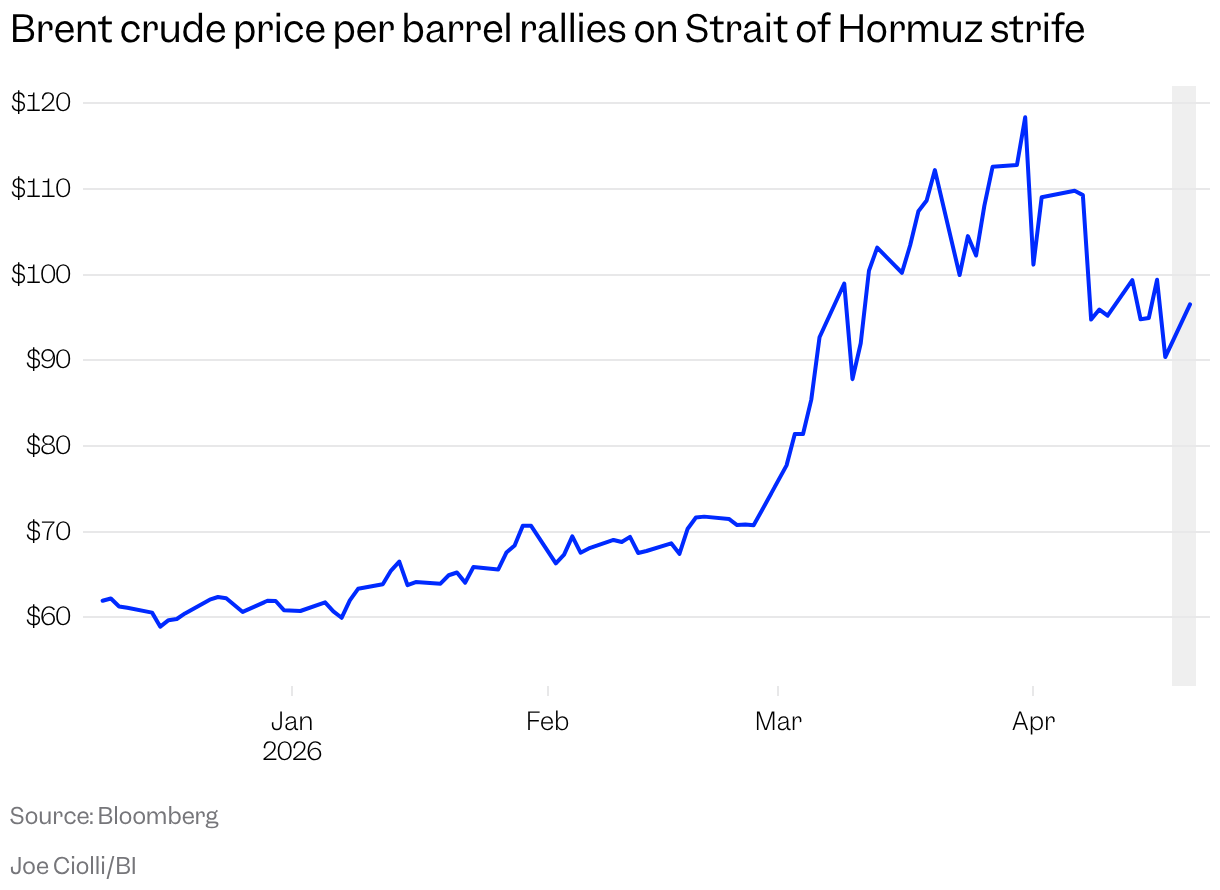
But the continued closure of the strait has forced several countries to enact energy-saving tactics as prices remain high. The Philippines, for example, implemented a four-day workweek for government employees. In the US, the national average price for a gallon of regular gas surpassed $4 in March, the first time that's happened since August 2022. Additionally, rising jet fuel costs have forced some airlines to cancel flights and increase customer fees.
Heightened tensions and a fragile ceasefire have contributed to volatile trading.
President Donald Trump said peace talks between the US and Iran would resume after a tense weekend. Iran fired on ships a day after the US president announced the Strait of Hormuz was open.
"My Representatives are going to Islamabad, Pakistan — They will be there tomorrow evening, for Negotiations," Trump wrote in a Truth Social Post on Sunday.
"We're offering a very fair and reasonable DEAL, and I hope they take it, because if they don't, the United States is going to knock out every single Power Plant, and every single Bridge, in Iran."
However, Iran said hours later that it would not participate in the second round of negotiations with the US.
"Iran stated that its absence from the second round of talks stems from what it called Washington's excessive demands, unrealistic expectations, constant shifts in stance, repeated contradictions, and the ongoing naval blockade, which it considers a breach of the ceasefire," IRNA, the country's official news agency, posted in an X post on Sunday.
Monday's meeting would have been the second time the US and Iran have met for negotiations in Islamabad amid the current conflict. Vice President JD Vance participated in peace talks earlier this month, though they ultimately failed after 21 hours. The heightened tensions come amid a two-week ceasefire deal between the US and Iran.
In response to the failed negotiations, Trump said on April 12 that the US Navy would impose a blockade of the Strait of Hormuz "effective immediately."
Iran agreed not to attack ships transiting the Strait of Hormuz on Friday as part of the ceasefire deal that extended to Lebanon, but it reversed course the next day and closed it again over the US blockade of its ports.