
Patrick T. Fallon / AFP via Getty Images
- The new CPI report showed annual inflation sped up to 3.8% in April, the highest rate since 2023.
- Higher energy prices due to the Iran war are affecting consumer prices.
- Prices at the pump are having unequal effects on consumers, depending on their household income.
US annual inflation accelerated more than expected, with the consumer price index rising 3.8% in April from a year ago. Economists expected a 3.7% increase, and it's the highest inflation rate since 2023.
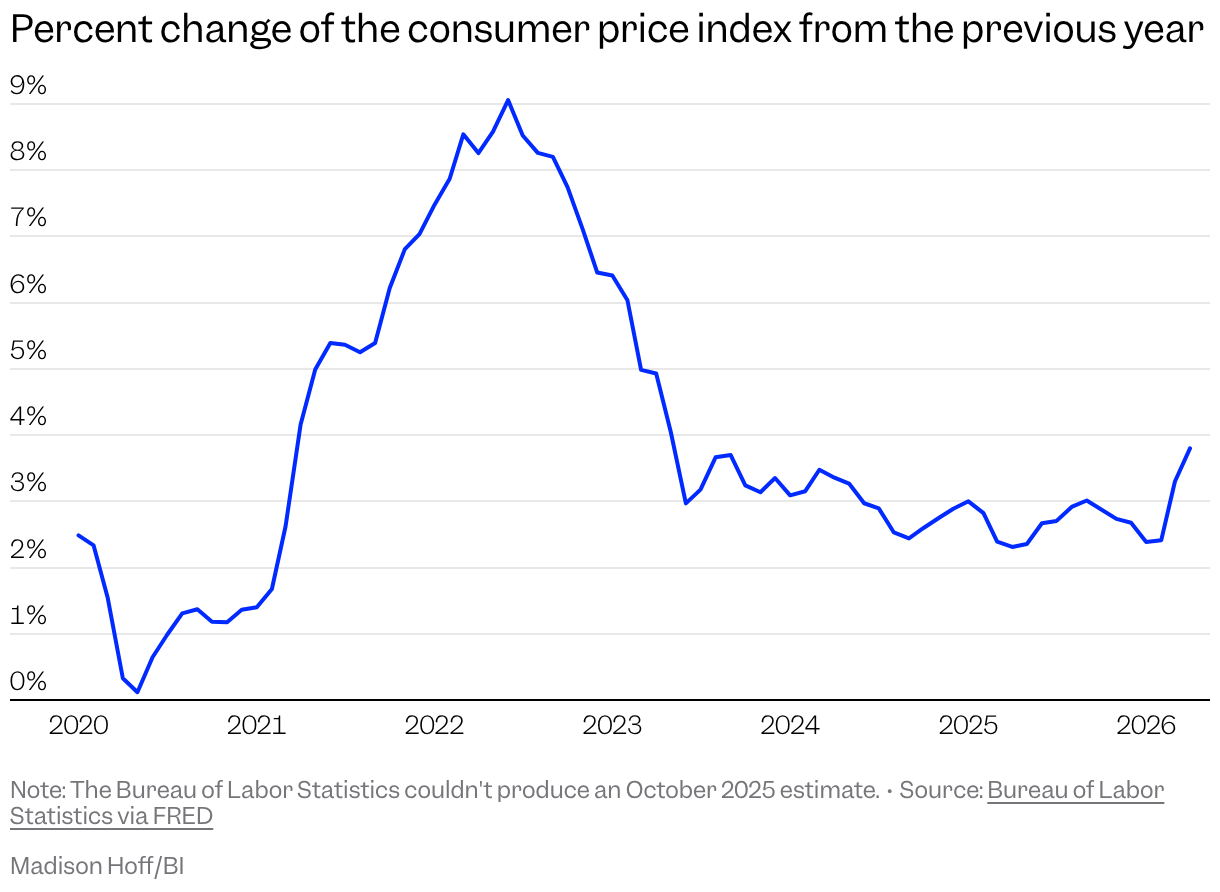
CPI increased 0.6% from March, as expected, and was cooler than March's 0.9% rise.
The new inflation spike is starting to hit workers' wallets and outpace wage growth. Real earnings dropped by 0.5% over the month and were down 0.3% over the year.
Core CPI, which excludes volatile food and energy prices, increased 2.8% from a year ago in April, just above the forecast of 2.7% and the previous 2.6% increase. Core CPI increased 0.4% from March, more than the previous 0.2% and the forecast of 0.3%.
Energy prices increased 17.9% year over year, the largest increase since September 2022. More specifically, gas prices increased 28.4% year over year. Energy prices rose 3.8% month over month, cooler than March's 10.9% increase.
AAA data showed gas prices have climbed to around $4.50 on average from just under $3 at the end of February when the Iran war started. Prices at the pump are likely leading lower-income households to modify their gas consumption, while higher-income households are mostly trucking along.
"Higher-income households have reduced real gas consumption only modestly and increased gasoline spending considerably compared with 2023," a Federal Reserve Bank of New York post said, based on spending data through March. "In contrast, lower-income households increased spending by much less and decreased real consumption by much more, potentially by carpooling or substituting to public transit where available."
Gas prices are also likely taking a toll on people's feelings about the economy. The consumer sentiment index dropped to a record low of 48.2 in May, based on preliminary data from the University of Michigan.
"Middle East developments are unlikely to meaningfully boost sentiment until supply disruptions have been fully resolved and energy prices fall," Joanne Hsu, the surveys of consumers director, said.
CME FedWatch, which shows traders' expectations of the Fed's decision, showed a more than 90% chance that interest rates will be held steady at the next scheduled meeting in mid-June, which will be the first under a new Fed chair.
"Given that inflation is heading in the wrong direction and the labor market is holding up, it's very unlikely that the Fed will be able to lower interest rates any time soon and it's possible that we may start pricing in rate hikes for next year," said Chris Zaccarelli, chief investment officer for Northlight Asset Management.
Kevin Warsh is expected to be confirmed as Jerome Powell's successor.
"The Federal Reserve exists for one fundamental purpose: to foster the economic conditions in which American families and businesses can thrive — stable prices, a strong job market, and a financial system they can depend on," Powell said at the Federal Open Market Committee press conference in April. "Every decision we make — whether about interest rates, or regulatory and supervisory matters, or other issues — is made in service of that purpose."