

Residents in Greece were witnesses to a hellish-looking dust storm this week. The dust originated from the Sahara desert in North Africa and was blown across the Mediterranean Sea by strong winds.
Residents in Greece were witnesses to a hellish-looking dust storm this week. The dust originated from the Sahara desert in North Africa and was blown across the Mediterranean Sea by strong winds.
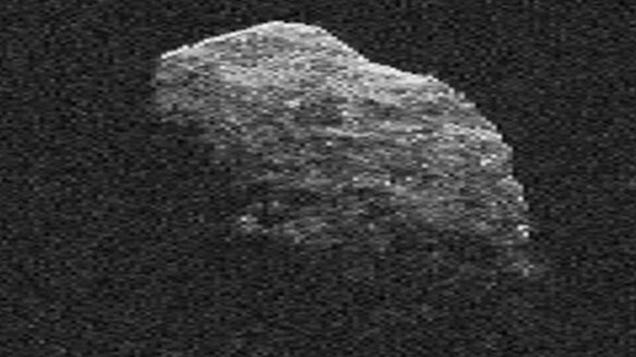
In about five years’ time, a potentially hazardous asteroid will swing by Earth at an eerily close distance of less than 20,000 miles (32,000 kilometers). During this rare encounter, Apophis will be ten times closer to Earth than the Moon and scientists want to take full advantage of its visit.

Food and Drug Administration officials reported this week that lab tests have found genetic material from strains of H5N1 avian influenza in samples of store-bought pasteurized milk. Officials say these samples do not appear to contain live virus and that the commercial milk supply should still be safe. But the…
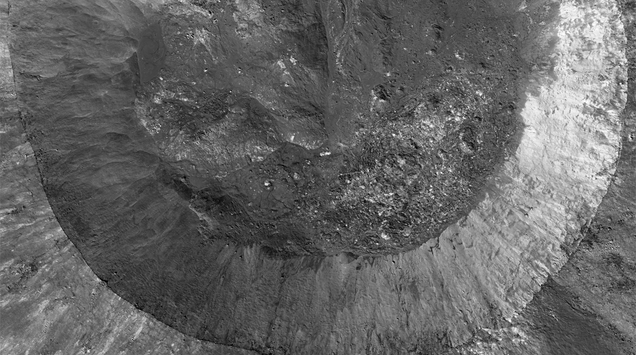
For nearly a decade, a near-Earth asteroid named Kamo’oalewa has invoked speculation over how it came to orbit the Sun in total synchrony with Earth as though it shares some special relationship with our planet. A new study of the oddball may have pinpointed where it came from: a young impact crater on the far side of…

This story was originally published by Grist. Sign up for Grist’s weekly newsletter here.
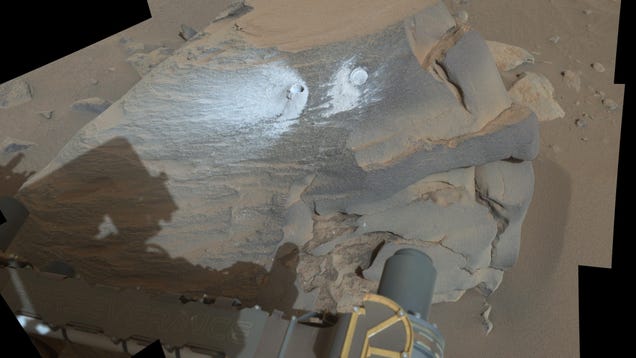
Unlike its predecessor Curiosity, NASA’s Perseverance rover is explicitly intended to “search for potential evidence of past life,” according to the official mission objectives.

A new experimental mission by NASA is now flying in orbit, aiming to use photons from the Sun to propel its way to higher altitudes.
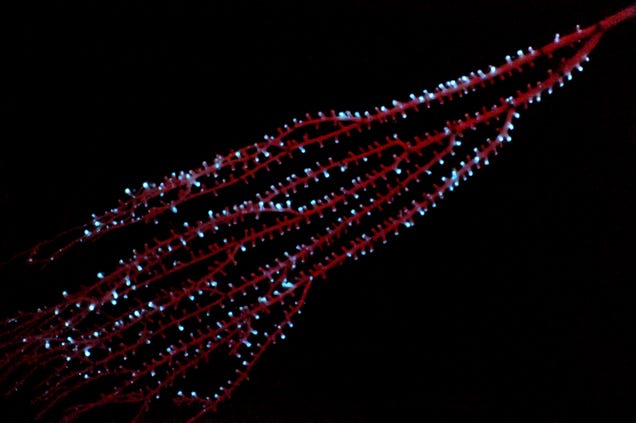
Bioluminescence, the eerie, beautiful phenomena that allows living things to glow, is way more ancient than previously thought, according to a team of researchers that recently studied the ability in octocorals.
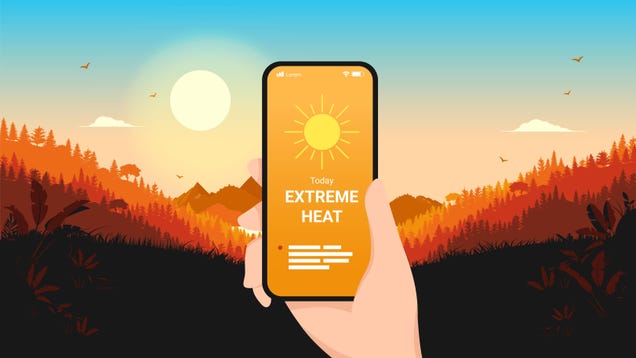
On Earth Day, the National Weather Service and the Centers for Disease Control and Prevention teamed up to announce a new heat risk system to better communicate the severity of hot weather. The color-coded system added magenta, a fifth-tier of heat severity, beyond red, to communicate extreme heat “rare and/or…
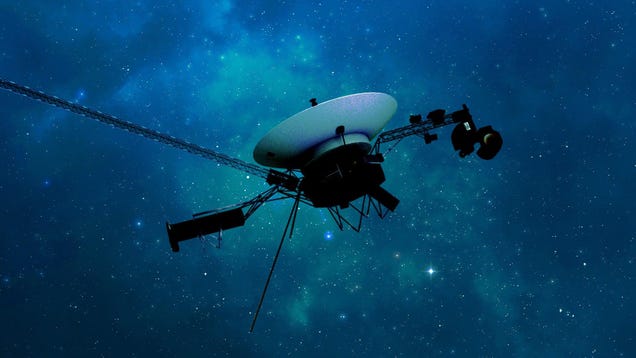
The Voyager 1 spacecraft returned usable data for the first time in more than five months, giving hope for the 46-year-old mission to finally be able to resume its normal operations.